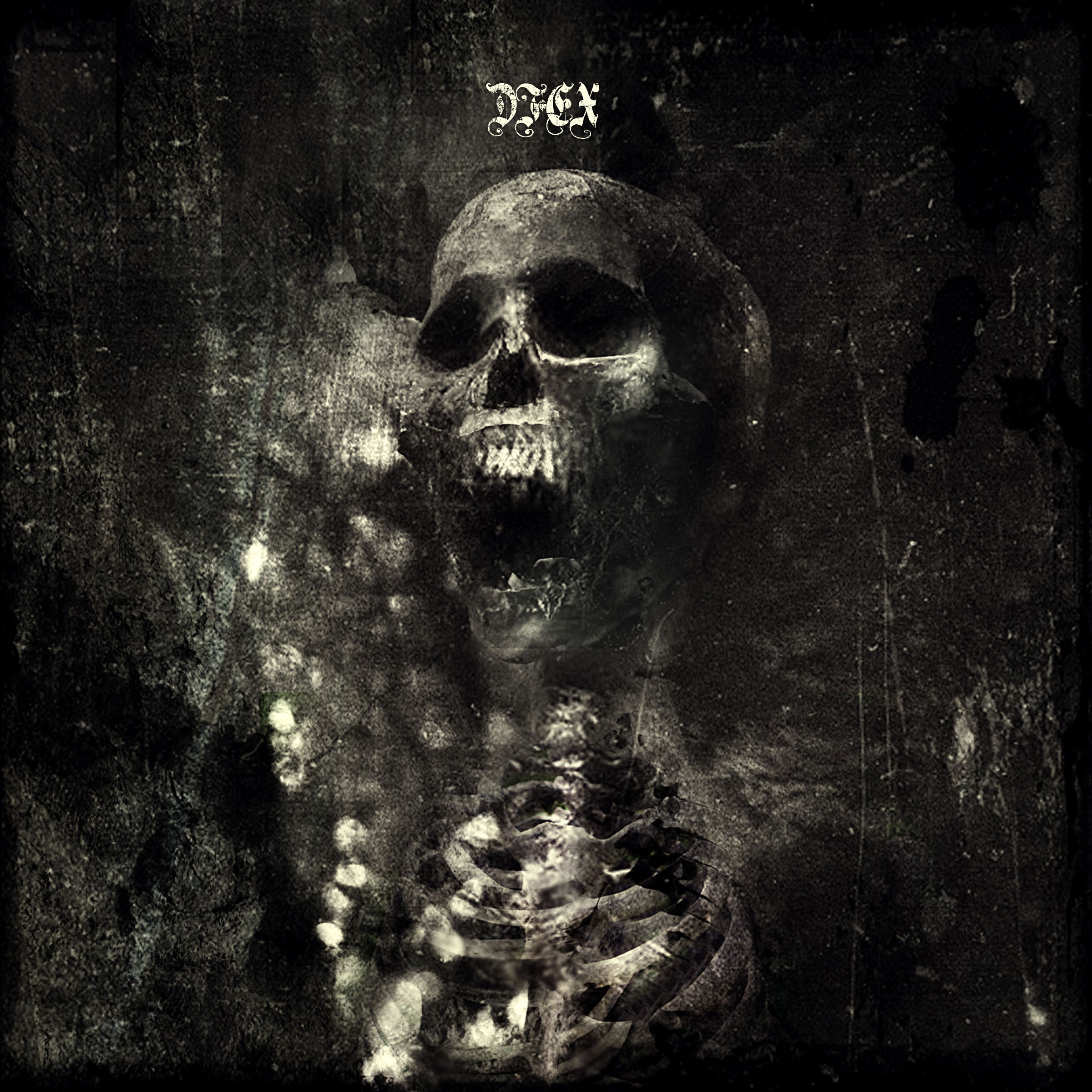
So I never actually got around to telling the story/idea behind the Apocalypta trilogy. They were all composed under a shared idea that I use song titles and transitions to tell a story behind a “pirate hunter” named Captain Brooks. A first name was never come up with, but since I’m officially writing it down, let’s go stereotypical and say his name is Edward Brooks, Captain of the Silent Star.
The whole idea was to tell a story of an early 18th century pirate hunter, his eventual demise, and the resurrection of him into his now corrupted self, along with his crew. Think like Lazarus Project, but instead of being possessed by an evil spirit, Brooks was more or less a good man, but he let his mission/goal get in the way of true happiness for him, leading him down a dark path with no way to turn back.
The story of this project goes through themes of corruption, greed, supernatural elements, and fate. Brooks and his crew never betray each other, but due to a plethora of “happy” endings, I thought it more fitting to tell a story of hopelessness. I feel this is more realistic, as we do not always get the outcome we want, no matter how hard we try.
Each song of the current lineup tell a story of what happened (Apocalypta Vol. I and Apocalypta Vol. II). I’m going to break down each song, such that there is a better understanding for the storytelling.
Apocalypta Vol. I
This was the first installment I did for this series. It’s seen some major revisions over the years, finally landing on the current version it was released under. I always saw this one as the “what I was” part, meaning, it introduces Brooks, his crew, and The Silent Star.
1: The Curse of the Silent Star
I always treated this song as the main theme of the entire project. It is not just the opening track, but the first glimpse into the fate of Brooks, his crew, and the Silent Star herself. Even before the story fully begins, there is already a sense that something is wrong. The music carries moments of despair, almost like the ending is being hinted at before we even understand what caused it.
One of the major transition elements is the hammering of a ship bell. I wanted that sound to immediately place the listener on the deck of a vessel, surrounded by wood, rope, water, and steel. The low end of the drums was meant to feel almost like a work song, as if the crew is moving with purpose, hauling lines, loading cannons, and keeping the ship alive through sheer force of will.
The choir was written to feel like a prayer. Not necessarily a peaceful one, but the kind of prayer said by men who already know they may not be saved. It gives the track a religious weight, almost as if the crew is asking God for mercy before they even realize they will need it.
The single violin was used to represent isolation. Brooks and his crew are not alone physically, but they are isolated in every way that matters. They are far from home, forgotten by the people who sent them, and treated as expendable despite believing they were serving a noble cause. The violin cuts through the larger arrangement like one lonely voice trying to be heard over the weight of the ship, the sea, and fate itself.
In that way, this song becomes the thesis of Apocalypta. It introduces the grandeur of the Silent Star, but also the loneliness underneath it. It sounds heroic on the surface, but buried beneath that heroism is the curse waiting to reveal itself.
2: Captain Brooks
This song serves as the introduction to Brooks as a character. If The Curse of the Silent Star is the main theme of the story, then Captain Brooks is the first real look at the man before the curse, before the betrayal, and before everything begins to fall apart.
Unlike some of the darker tracks later in the trilogy, this one still has a sense of movement, confidence, and purpose. Brooks is not yet the broken man he becomes. At this point, he still believes he is on the right side of history. He sees himself as a protector of the seas, a captain with a duty, and someone capable of bringing order to a violent world.
When I wrote this track, I always pictured a scene similar to Captain E.J. Smith standing on the bridge in Titanic, giving the order to go full ahead. There is still a gleam in Brooks’s eye here. The ocean is open, the ship is alive beneath him, and the world still feels like something he can conquer. There is pride in the music, but not arrogance yet. It is the sound of a man who believes his purpose is noble.
The Apocalypta theme is still tied into the song, but here it feels more heroic than tragic. That is important because Brooks’s downfall only works if we understand what he used to be. He was not born cursed, corrupted, or cruel. He was a man chasing something he thought was righteous, and this song captures him at the height of that belief.
In a way, Captain Brooks is the last time we hear him without the full weight of doubt on his shoulders. It is the sound of command, ambition, and hope before the mission starts to reveal what it truly is.
3: The Silent Star
This song introduces the Silent Star herself, not just as Brooks’s ship, but as one of the central characters of the entire story. At this point in the trilogy, she is still alive in the natural sense: full of movement, crew, purpose, and pride. Before she becomes a ghost of herself, this track shows what she was at her peak.
I wanted the song to feel happy, grand, and almost bouncy, because the Silent Star is not supposed to feel cursed yet. She is massive, beautiful, and full of life. I always imagined her as a Man-o’-War-style vessel: not necessarily the fastest ship on the water, but one that commands attention the moment it appears on the horizon. She is the flagship of Brooks’s group of five ships, and there is a sense that everyone aboard understands they are part of something important.
The Silent Star’s theme is usually carried by flutes and French horns, giving her a sound that feels both elegant and powerful. The flutes bring a sense of motion and sea air, while the horns give the ship weight and nobility. This was meant to make her feel almost larger than life, like a vessel that represents hope, order, and the strength of the mission Brooks believes in.
The larger orchestration was also intentional. I used full string sections, winds, woodwinds, and brass to make the ship feel populated and alive. With around sixty to seventy instruments, the arrangement itself becomes a musical version of the crew. Every section adds to the feeling that the Silent Star is not empty steel and wood, but a living world moving across the sea.
That is what makes her later fate more tragic. The ship we hear in this song is not the broken wreck that rises from the water in Volume II. This is the Silent Star before the curse takes hold: proud, bright, and breathtaking. She is the heart of Brooks’s world, and for a moment, it really does feel like nothing could ever sink her.
4: Pirate Hunter
This track represents Brooks and the Silent Star doing what they were built to do. On the surface, it is the heroic mission: hunt pirates, protect the seas, and bring order to chaos. At this point, Brooks still believes in the cause. He believes that every cannon fired and every ship pursued serves a greater good.
But this is also where the story begins to turn.
The question behind this song is simple: who gets to decide what makes someone a pirate? Brooks is told who the enemy is, and he acts on that information because that is his duty. To the companies and powers backing him, he is doing exactly what he was meant to do. He is clearing threats, protecting trade, and enforcing control. But to the smaller nations, independent crews, and communities caught in the middle, Brooks may not look like a hero at all. He may look like the arm of a corrupt empire.
The beginning of the song still carries the pride of the Silent Star. She is sailing with purpose, the flagship of Brooks’s command, moving across the water like a symbol of authority. Then the song shifts into battle. Brooks’s group encounters a lone vessel that has been deemed a pirate ship. That word matters: deemed. It is not confirmed. It is not questioned. It is simply labeled, and that label is enough to sentence everyone aboard to death.
The Silent Star turns hard to starboard and opens fire. Her broadside cannons tear into the vessel, scuttling it and leaving its crew to perish. Musically, this is where the grandeur of the ship becomes something more brutal. The same power that made the Silent Star feel majestic in the previous track now becomes terrifying.
After the battle, Brooks begins to doubt what he has done. Something about the ship does not sit right with him. It did not look like the pirate vessels he had hunted before. It did not move like one. It did not feel like one. For the first time, he starts to wonder whether he is truly fighting evil, or whether he has been used to destroy innocent men under the comfort of a false title.
This is the first real fracture in Brooks’s faith. He still wants to believe his mission is noble, but the certainty is gone. Pirate Hunter is not just a battle track. It is the moment Brooks begins to understand that righteousness can be manufactured, and that a good man can still become the weapon of a corrupt cause.
5: Are We Good?
This track is Brooks sitting with what happened in Pirate Hunter. The battle is over, the smoke has cleared, and the Silent Star is still afloat, but something inside Brooks has shifted. He should feel victorious. He should feel like he did his duty. Instead, all he can feel is doubt.
Are We Good? is not asking whether Brooks and his crew are safe. It is asking something much heavier: are we still good men after what we just did?
The ship they destroyed did not feel right. It did not match what Brooks had been taught to recognize as a pirate vessel. There was something wrong with the order, something wrong with the target, and something wrong with how easily everyone accepted it. Brooks begins to realize that a lie does not need to be complicated to be effective. Sometimes all it takes is one label — “pirate” — and good men will fire without question.
This song is treated as an internal conflict for Brooks. He is not ready to call himself a villain, but he can no longer comfortably call himself righteous either. That uncertainty is what makes the track important. He is caught between the man he thought he was and the man his actions are turning him into.
The abrupt drums near the end call back to the main theme, but they feel different now. Earlier, those rhythms carried the weight of labor, duty, and life aboard the ship. Here, they feel more like a decision being made. Brooks has reached the point where doubt becomes action.
By the end of the track, Brooks has made up his mind. This was never a clean fight between good and evil. He was sent to carry out another man’s agenda under the false belief that he was fulfilling his own purpose. He thought he was protecting the seas, but he may have been erasing good men for an unjust cause.
Are We Good? is the last moment before Brooks fully turns. It is the sound of a conscience waking up too late.
6: Dear Maria, I Will Sin
This track is one of the most intimate moments in the story because it does not begin as a declaration of war. It begins as a letter.
I always imagined Brooks alone in his quarters, writing to Maria — whether she is a lover, a wife, or simply the one person who still represents home to him. The ship is quiet around him, but not peaceful. The weight of what happened in Pirate Hunter and Are We Good? is still sitting on his chest. He knows what he has done, and worse, he knows what he is about to do next.
At first, the song feels restrained, almost fragile. This is Brooks trying to explain himself before he fully loses control. He is not writing to justify his actions as much as he is trying to confess them. He wants Maria to understand that he did not begin this journey as a monster. He believed in the mission. He believed he was doing something noble. But that belief has been poisoned, and now all that is left is anger, shame, and the horrible clarity that he cannot go back to who he was.
The title, Dear Maria, I Will Sin, is important because Brooks already knows he is crossing a line. He is not asking for permission. He is not even asking for forgiveness yet. He is admitting that whatever comes next will stain him, even if he believes it has to be done. There is something tragic about that: a good man recognizing the sin before committing it, and still choosing to continue.
As the song builds, the letter becomes less controlled. I picture his hand shaking as he writes, the ink pressing harder into the page, the words becoming less elegant and more desperate. His grief starts turning into rage. He is angry at the men who used him, angry at the lies he believed, angry at the blood on his own hands, and angry that the only path left to him is one that will damn him further.
Eventually, Brooks reaches the point where he cannot keep writing. He slams the quill down, almost in tears, not because he is weak, but because he understands exactly what he is becoming. That moment is where the rock and metal elements finally break through. His rage is no longer buried inside the orchestration. It spills outward.
To me, this song is the emotional bridge between doubt and treason. Are We Good? is Brooks asking the question. Dear Maria, I Will Sin is him realizing he already knows the answer. He is not good anymore, not completely. But in his mind, if sin is the only way to answer the evil that used him, then sin is what he will choose.
7: Treason
This track is the point where Brooks stops questioning and starts acting.
By this point, the doubt from Pirate Hunter and Are We Good? has turned into rage, and the confession of Dear Maria, I Will Sin has become a decision. Brooks knows he has been used. He knows the mission was built on lies. He knows that men may have died by his command for reasons that were never just. But instead of breaking down, he turns all of that guilt outward.
Treason is where Brooks gives his crew the ultimatum: stand with him, or stand against him.
I always imagined this moment happening on the deck of the Silent Star, with the crew gathered in front of him. This is not a clean heroic speech. It is not inspiring in the traditional sense. Brooks is angry, wounded, and nearly beyond reason, but he is also completely convinced that he is right. To him, loyalty to the Navy, the companies, or the powers that sent them no longer means honor. It means obedience to corruption.
Some men flee. Some refuse. Some cannot bring themselves to follow him into open betrayal. But Brooks is not alone. Around one hundred men choose to stay with him, not because the choice is easy, but because they believe him — or at least believe in him more than they believe in the people who sent them there.
That makes the track tragic rather than simply violent. Brooks and his loyal crew are not betraying each other. They are choosing each other over the world they once served. But the cost of that loyalty is enormous.
The true turning point comes when Brooks turns the Silent Star against the rest of his own group. These were not strangers. These were men he sailed beside, fought beside, and once called brothers. Now, in his eyes, they are part of the lie. The Silent Star opens fire, and the same broadside power that once represented order and justice becomes an act of rebellion.
This is also where the witch’s presence begins to reveal itself more clearly. Her voice appears through ritualistic chords, almost hidden beneath the weight of the moment. Looking back, the curse was already present before Brooks ever reached the marsh. The witch’s influence was subtle at first, buried beneath the heroic themes and battle rhythms, only becoming obvious once the crew had no way out.
That detail changes the meaning of the track. Brooks believes this decision is entirely his own, and emotionally, it is. His anger, guilt, and betrayal are real. But something darker has already started circling the edges of the story, feeding on those emotions and guiding him toward the point of no return.
The more somber sound emphasizes the weight of what he is doing. This is not victory. It is not freedom. It is the sound of a man burning every bridge behind him because he cannot live with the road that brought him here.
By the end of Treason, Brooks has crossed the line completely. He may still believe he is acting against corruption, but he has become corrupted by the act itself. There is no turning back now.
8: Run Like Hell
This track is where the consequences of Treason finally catch up to Brooks and the Silent Star.
For all her size, beauty, and power, the Silent Star was never built to fight an entire group alone. She was the pride of her Navy, a massive flagship meant to command the water, but pride does not make a ship invincible. After Brooks turns against his own group, the Silent Star finds herself outmatched. She is too large, too damaged, and too slow to win a fight against four ships at once.
That is what makes Run Like Hell feel desperate. This is not Brooks charging into battle with certainty. This is survival. The rebellion has begun, but it is already falling apart. Brooks may have made his choice, but now he has to live with what that choice costs.
I always imagined the opening as chaos: cannon fire, splintering wood, torn canvas, men shouting over the storm of battle. The Silent Star is still fighting, but every hit takes something from her. The same ship that once felt grand and untouchable in The Silent Star is now being broken piece by piece.
In a last-ditch effort, Brooks orders the crew to go full canvas and run. It is not a proud retreat. It is panic under command. Every sail is thrown open, every man is pushed past exhaustion, and the ship is driven forward with whatever strength she has left. Brooks is not trying to win anymore. He is trying to escape long enough to fight another day.
For a moment, it works.
The Silent Star slips away from the battle, wounded but still moving. But the victory is hollow. She is badly damaged, slowly sinking, and everyone aboard knows it. The crew may have escaped the cannons, but they have not escaped the fate waiting beneath them. The ship that carried their hope is now carrying them toward the depths.
As the track moves forward, I picture the Silent Star entering narrow rivers and swampy marshland, far from the open sea where she once belonged. The environment itself feels wrong. The water is still, heavy, and unnatural. Instead of safety, the marsh feels like a trap slowly closing around them.
Then they find the clearing.
The water there is different from the mossy green around it. It glows with a pale blue light, almost beautiful, almost holy, like angels are waiting beneath the surface to guide them somewhere safe. To the exhausted crew, it looks like refuge. After everything they have survived, it feels like maybe they have finally found mercy.
But that is the lie.
This is where the tragedy of Volume I ends. Brooks and his crew believe they have escaped judgment, but they have only been led to it. The Silent Star is dying. The men are wounded, exhausted, and desperate. And the strange blue water is not salvation — it is the doorway into the curse.
Run Like Hell is the sound of a doomed ship mistaking the trap for sanctuary. It ends Volume I not with victory, but with false hope: the cruelest kind of hope, because it lets the crew believe they are safe right before everything is taken from them.
Apocalypta Vol. II
Volume II was the start of the darker path. Introducing more rock like elements, synthesizers, and the grand organ. This part of the trilogy emphasizes the despair and Brooks’s new hell on earth.
1: Wrong Turn
Wrong Turn is the beginning of Volume II, and to me, it feels like the curtain rising on the darker half of the story.
After Run Like Hell, Brooks and the crew believe they have found shelter. The Silent Star is broken, sinking, and barely holding together, but the strange blue clearing in the marsh gives them a brief sense of relief. It looks almost holy, like something beneath the water is guiding them toward safety. But Wrong Turn reveals the truth: they were never being saved. They were being led.
I always saw this track as a transition piece, almost like the band tuning before the second act begins. It has that feeling of an intermission ending, where the audience knows the story is about to become something else entirely. Volume I was about pride, doubt, betrayal, and escape. Volume II is where the supernatural horror takes over.
The horns are heavier here, using more “braam”-style hits to make everything feel larger and more oppressive. The music does not move with the same heroic momentum as earlier tracks. Instead, it feels like something massive is waking up beneath the surface. The low end becomes darker, the orchestration becomes heavier, and the whole track feels less like a ship sailing forward and more like a door opening somewhere it should not.
The title matters because Wrong Turn is not just about Brooks making a navigational mistake. It is about the entire path that brought him here. Every choice, every order, every cannon fired, every doubt ignored, and every act of rebellion has carried the Silent Star to this exact place. Brooks thinks he escaped the consequences of his treason, but in reality, he has sailed directly into them.
This track also reframes the ending of Volume I. The clearing was not sanctuary. The light beneath the water was not angelic. The marsh was not a hiding place. It was bait. The Silent Star and her crew were exactly where they were wanted, and by the time they realize that, there is no open sea left to run to.
The seamless transition into Witchcraft is important because it makes the two tracks feel connected, almost like Wrong Turn is the inhale before the curse is spoken aloud. The crew has entered the trap, the ship is too damaged to escape, and whatever has been waiting beneath the water is finally ready to reveal itself.
Wrong Turn is the sound of false refuge collapsing. It is the moment the crew realizes they did not find safety at the end of the river. They found the beginning of their hell.
2: Witchcraft
Witchcraft is where the story finally stops hiding what has been underneath the surface.
Up to this point, the supernatural side of Apocalypta has mostly existed in fragments: strange tones, ritualistic chords, the witch’s voice appearing at the edge of Treason, and the unnatural blue light beneath the marsh water. But here, there is no more subtlety. Witchcraft is the curse revealing itself fully.
I always saw this song as a collision of worlds: EDM, orchestra, and metal all crashing together at once. That combination matters because the crew is no longer in the world they understood. The clean naval identity of Volume I is gone. The order, pride, and ceremony of Brooks’s mission have been replaced by something distorted, aggressive, and unnatural.
The heavy braams and in-your-face hits make the track feel like something massive pressing down on the Silent Star. This is not a battle the crew can fight with cannons. It is not another ship they can outrun. It is an invisible force closing around them, and every hit feels like the water itself is turning against them.
This is where the witch’s voice returns, no longer as a distant suggestion, but as a command. She curses Brooks and the men of the Silent Star, binding them to her will. The horrifying part is that they are not being punished by some random force they stumbled into. The witch had been pulling the strings long before they reached the marsh. Brooks thought his choices were leading him toward revenge, escape, or justice, but he and his crew were being moved like pieces on a board.
That is what makes the Silent Star so tragic here. She was built to protect her crew. She carried them through battle, betrayal, and escape, but now she is helpless. Her damage from Run Like Hell is bad enough, but the curse finishes what the cannons started. The ship is pulled beneath the water by something she cannot resist.
The waterlogged synthesizer is one of the most important sounds in the track. To me, it represents the drowning of the crew and the corruption of the world around them. It sounds submerged, warped, and wrong, as if the music itself is being dragged underwater with the ship. The crew is not just dying physically. Their reality is being bent into something else.
The lone violin returns again, calling back to the isolation from The Curse of the Silent Star. But this time, the isolation feels worse. In Volume I, the violin represented men forgotten by the people who sent them. Here, it represents men completely cut off from salvation. No Navy is coming. No God answers. No open sea remains. There is only the witch, the water, and the curse.
Witchcraft is the moment Brooks loses the last illusion of control. He betrayed his command, chose his path, and tried to run from the consequences, but none of it mattered. The trap had already closed. The Silent Star sinks, the crew drowns, and the witch claims what she had been guiding toward herself all along.
3: Cursed
Cursed is the aftermath of Witchcraft. The Silent Star has been pulled beneath the water, the crew has drowned, and Brooks has lost the last piece of control he thought he had. But the horror of this track is that death does not take them.
They wake up into something worse.
This song has always felt like the “what am I?” moment of Volume II. Brooks and his crew are not alive anymore, but they are not truly dead either. They still exist, but in a state that feels wrong, as if reality itself rejected them. They breathe, but they are eternally drowning. They move, but they are bound. They think, but their will is no longer fully their own.
That contradiction is what makes the curse so cruel. If they had simply died, their story would have ended in the marsh. Instead, they are trapped in a kind of purgatory, forced to remain conscious inside the punishment. They can feel air enter their lungs, but the memory of water never leaves. They can walk the deck, hear the ship, and see each other, but none of it means they are free.
The witch does not turn them into mindless monsters. That would almost be mercy. Instead, she leaves enough of them intact to understand what has happened. Brooks still knows who he is. The crew still remembers what they were. They can control their actions in small ways, but they cannot control the deeper pull of the curse. Their bodies obey, their minds remain aware, and their souls are caught somewhere in between.
Musically, this is where the despair becomes heavier and more permanent. The drums hit with weight, not like battle drums, but like something dragging its feet through water. The downward horn movements feel like the crew sinking again and again, even though they have already drowned. Everything points downward, as if the music itself cannot rise.
This is also where the pipe organ begins to fully matter. Its muted, slightly underwater sound gives the track a ritualistic, haunted quality. It feels sacred in the wrong direction — not like a church offering salvation, but like a cursed cathedral built beneath the sea. The organ makes the crew’s condition feel eternal, as if this is no longer an event happening to them, but a new existence they have been forced into.
Cursed is not about the shock of the transformation. It is about the realization afterward. Brooks and his men understand that the worst has already happened, and yet somehow they are still here. They cannot return to who they were. They cannot die to escape what they have become. And they cannot yet understand what the witch intends to make them do.
This track is the sound of the crew waking up inside their own damnation. It is quiet horror turned permanent — the moment they realize the curse did not end their suffering. It preserved it.
4: The Silent Star Lives
The Silent Star Lives is the moment the ship stops being only a vessel and becomes something much more horrifying: a member of the cursed crew.
After Witchcraft and Cursed, Brooks and his men have already been transformed. They are trapped between life and death, aware of what they have become but unable to escape it. For a moment, it almost feels like the Silent Star is gone — lost beneath the water, broken by battle, swallowed by the marsh, and unable to protect the people she carried.
But then something begins to move below.
I always imagined this track starting with the water itself becoming restless. Deep beneath the surface, the wreck of the Silent Star begins to churn. She should not be able to rise. She is too damaged, too broken, and too far gone. But the curse does not obey what should be possible. Slowly, impossibly, the ship starts coming back.
When she breaks the surface, she is not the same ship from Volume I. This is not the bright, grand, breathtaking flagship from The Silent Star. This is her corpse given motion. Her hull is tattered, her wood is split, her sails are ruined, and yet she floats. She is alive, but in the wrong way.
That is what makes the track unsettling. The Silent Star has returned, but not as salvation. She has become bound to the same curse as her crew. The ship and the men are no longer separate. They are connected now, all part of the same unnatural existence, trapped together in a fate none of them chose.
The orchestral swells and off notes are meant to capture how impossible this moment feels. There is grandeur here, but it is distorted. The music remembers what the Silent Star used to be, but every familiar shape is warped by the curse. It should feel triumphant when she rises, but instead it feels wrong — like witnessing a miracle that should never have happened.
The damaged drums help sell that brokenness. They call back to the earlier life of the ship, but now they sound fractured, as if the heartbeat of the Silent Star has been rebuilt from wreckage. The broken bell is especially important because it ties back to the main theme. In Volume I, the bell placed us aboard a living ship. Here, it reminds us that the same ship has returned, but the sound is cracked, corrupted, and haunted.
The organ adds another layer to that resurrection. It gives the moment a cursed, almost ceremonial feeling, as if the Silent Star is not simply rising from the water, but being summoned. The odd notes make her return feel unnatural, like the witch’s power is forcing life back into something that should have stayed dead.
By the end of the track, the Silent Star lives again. But that statement is not comforting. She is a floating shipwreck, captained by ghosts, crewed by men who cannot die, and bound to the will of the witch. She is still Brooks’s ship, still the heart of his world, but now she reflects what he and his crew have become: broken, cursed, and impossible to lay to rest.
The Silent Star Lives is the dark mirror of Volume I’s The Silent Star. The first version showed her as proud, bright, and full of life. This version shows her resurrected as something tragic and monstrous. She has survived, but survival has become its own kind of damnation.
Leave a Reply