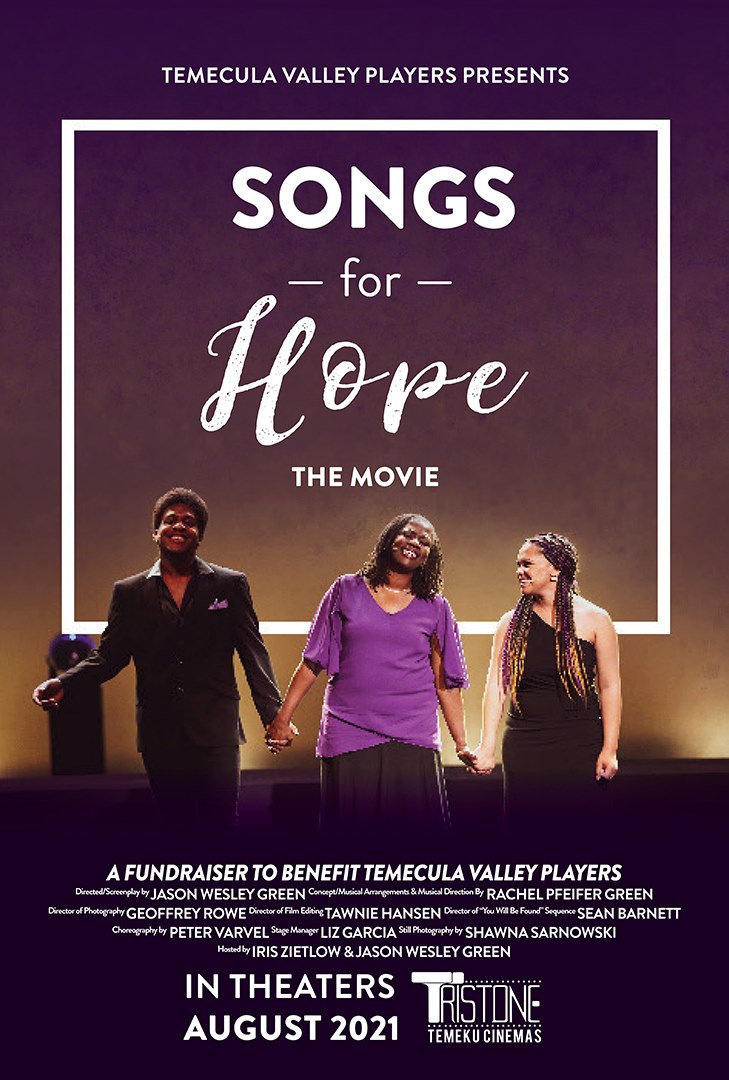
Songs for Hope is a 2021 original community performance centered on healing, remembrance, and human connection in the wake of the COVID-19 pandemic. Presented through the Old Town Temecula Community Theater, the production was created as a night of music and reflection, using the arts as a way to bring people together after a period marked by fear, isolation, loss, and uncertainty. Rather than functioning as a traditional narrative film or concept album, Songs for Hope is best understood as a live musical event built around a shared emotional experience.
The performance was created and produced by Jason and Rachel Green, with the stated goal of using the power of the arts to create a better world. Its purpose was not only to entertain, but to offer comfort to a community still processing the effects of the global pandemic. The event was described as an original creative performance meant to bring “hope, healing, and connection” to those affected by the pandemic.
At its heart, Songs for Hope is about recovery. It reflects on what people endured during the pandemic: separation from loved ones, collective anxiety, grief, exhaustion, and the emotional weight carried by families, workers, and communities. The title itself points toward the central idea of the project: that music can become a form of hope when words alone are not enough. Through song, the performance gives shape to feelings that many people experienced at the same time but often carried privately.
The work also carries a strong sense of gratitude. The City of Temecula extended a special invitation to first responders, essential workers, residents, and their families, framing the event as a public acknowledgment of the people who continued serving their community during one of its most difficult periods. In that sense, Songs for Hope is not only about surviving the pandemic, but about recognizing the bravery, sacrifice, and resilience of those who helped others through it.
Thematically, the performance lives in the space between grief and renewal. It acknowledges pain without being defined by despair. It looks back on a difficult chapter while trying to create a path forward through music, community, and shared presence. The “hope” in the title is not presented as simple optimism, but as something more active: the decision to gather, remember, honor, and keep moving.
Because of this, Songs for Hope can be seen as a pandemic-era healing piece. It captures the emotional atmosphere of 2021, when many communities were attempting to reconnect after months of disruption. The performance speaks to the need for communal healing after collective trauma, using music as a bridge between personal loss and public remembrance.
In a broader sense, Songs for Hope is about the role art plays during crisis. It suggests that music can help people process what happened, honor those who carried the heaviest burdens, and remind a community that it is not alone. Rather than telling a single fictional story, the piece reflects a real shared experience: a community trying to find meaning, comfort, and connection after a time of profound uncertainty.